To begin

In the Name of Allah, the Most Gracious, the Most Merciful
Showing posts with label Lot-of-Links. Show all posts

Monday, 25 March 2013

Semi-full Reading List of 2013

Dear Reader,

So, as promised, here is a provisional list of books I want to read in 2013. This does not include the books I plan to re-read, e.g. Persuasion by Jane Austen. I'll probably post updates every few months, Inshallah, but I've also added two widgets for this in the side bar --->. This year, I've challenged myself to read one book a week: 52 weeks = 52 books. And because there are so many new books I want to read this year, the list is sort-of in the order of genre.

Fairytale retellings:
  1. Snow by Tracy Lynn
  2. Winter's Child by Cameron Dokey
  3. Water Song by Suzanne Weyn
  4. Midnight Pearls by Debbie Viguie
  5. Fathomless by Jackson Pearce
  6. Cinder by Marissa Meyer
  7. Scarlet also by Marissa Meyer
Sci-Fi: 
  1. The Matched Trilogy by Ally Condie
  2. The Maze Runner Trilogy by James Dashner
  3. Day of the Triffids by John Wyndham
  4. Divergent Trilogy by Veronica Roth (the latest buzz books)
  5. Delirium Trilogy by Lauren Oliver (the other latest buzz, or so I'm told)
  6. Origin by Jessica Khoury
  7. Emerald Green by Kerstin Geir (the final instalment of the Ruby Red Trilogy to be released in the UK on 8th October, so I am breathlessly anticipating this book, though I'm not holding my breath.)
Stand alone novels:
  1. When Wings Expand by Mehded Maryam Sinclair (a must read if you like TFiOS)
  2. The Bride of Lammermoor by Sir Walter Scott (a Classic I have not read before)
  3. I Capture the Castle by Dodie Smith
  4. And the Mountains Echoed by Khaled Hosseini (will be released in May)
  5. The Virgin Suicides by Jeffery Eugenides
  6. Through the Glass, Darkly by Jostien Gaarder (another non-English-speaking favourite writer)
  7. The Ringmaster's Daughter also by Jostien Gaarder
Poetry:
  1. Early Poems by Lord Alfred Tennyson
  2. Modern Poetry of Pakistan edited by Iftikhar Arif and translated by Waqas Khwaja
  3. Goblin Market by Christina Rossetti and illustrated by Dante Gabriel Rossetti
Other books that don't fit into the above categories:
  1. The Eyre Affair by Jasper Fforde
  2. A Study in Scarlet by Sir Arthur Conan Doyle (my first Sherlock Holmes, can't wait!)
  3. Code Name Verity by Elizabeth Wein
  4. A Great and Terrible Beauty by Libba Bray
  5. 13 Little Blue Envelopes by Maureen Johnson
  6. The Mark of Athena by Rick Roirdan
  7. The Bridgerton Happily Ever After by, yes you've guessed it, Julia Quinn (my guilty-pleasure book of the year)  
You'll notice how each category (except Poetry) has 7 titles in it. I assure you this is completely coincidental and does not hide a secret message *wink*. Of course, I don't have all these books with me right now. In fact, a few aren't even out yet (yes trilogies, I'm looking at you). But these are all the ones I have on my bedside bookshelf:  

Click on the picture for a better read.
Knowing what a keen I for detail you have, dear reader, I'm sure you've noticed that almost half of these books are from my Local Library (Aside: do you remember those? My local library is still standing because the building is part of the British Heritage, i.e. it's more than 100 years old, and also because we oldies protested it's closing down.) So you see, I'm using my library because it's an essential part of our local society and not only because I've significantly cut down my book-buying-budget. Anyway, this next picture is of the non-fiction, mainly novel-research, books that I am currently reading/plan to read.


For a complete overview of the books I've read and want to read you can now follow me on either shelfari or goodreads. There's some discrepancy between the two shelves but I'm currently working on sorting that out. Also, don't forget to follow me on twitter for regular updates.

Nida

P.S. - my best friend, Codename: Pixie, just started her own blog. Help me support and encourage her by checking out her first post Secrets. 

Wednesday, 13 March 2013

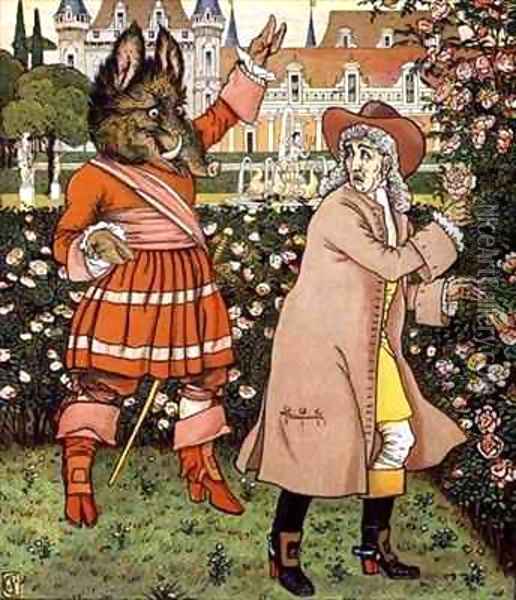
how Beauty came To the Beast

Dear Reader,

If you have been following my blog for some time, you'll undoubtedly be aware of my obsessive love for fairy tales. If not, then I present you with Exhibit A and Exhibit B as just a few examples. But today I want to talk a bit (or a lot, according to some) about my favourite of all fairy tales, most popularly known as The Beauty & the Beast.  

There are a few tales that seem to resonate through time in all kinds of different cultures: the tragedy of two 'star-crossed lovers', for example, that variously go by the names of Heer & Ranja, Laila & her Majnu, Juliet & Romeo, Sohni & Mahival or Katniss & Peeta, though that is another blog post in and of itself. Another such timeless tale is that of a beautiful girl, forced to stay with an evil/ugly/beastly man, whom she eventually falls in love with so he lets her go, but she cannot bare being parted from him for long and so she returns to him.  

The oldest story I can find that follows this pattern is that of Persephone (that's pronounced per-SEF-o-Nee) and Hades, an ancient Greek myth. Hades is the King of the Underworld and Lord of the Dead, but he falls in love with Persephone, the daughter of Zeus and Demeter (the goddess of the harvest and grain). Yet Persephone has many suitors so her mother hides her away in the forest. One day, overcome with desire for her and wanting a companion to remove his loneliness, Hades rips open the earth and kidnaps Persephone, taking her back to the underworld, where she becomes his Queen. There, he showers her with all the riches of the earth: gold, silver, diamonds and all other gems.  
But Persephone is still unhappy, and misses her mother greatly, who mourns her daughter's loss so much that the earth is plunged into a cold and frigid winter. Seeing Persephone upset, and wanting only to make her happy, Hades lets her go back to the surface. Her return to Earth brings with it spring, with all its flowers and blooms. Then at the end of harvest time, Persephone returns to the underworld, to Hades, and the world goes into winter again. Most versions say that she only returns because Hades tricked her, a few say she returns out of love for him. I'd like to believe that in her time in the underworld, she grew to love her morbid husband. But then again, I am one of those "glass half-full" type of people. 

A bit of history now. In 1756, Jeanne-Marie Laprince de Beaumont (aside: that is one cool name) set the foundation for the story we normally think of today when we talk about The Beauty & The Beast. It follows the tale of a ship-owning merchant who becomes bankrupt, has to leave his home in the city and move to the countryside with his 3 daughters. Once they become accustomed to their provincial life they hear news that one of the merchant's ship has returned. So the father heads back to the city. On his way home however, he gets lost in a forest and comes across an enchanted castle where he is taken in and cared for. The next day, on his way out of the castle grounds, he picks a beautiful rose for his youngest daughter Beauty (that's Belle in French), who asked for nothing more than some rose seeds as gift from the city (her elder sisters had asked for fancy clothes and fine jewellery, none of which the father was able to obtain).

This is when he encounters the enraged Beast who owns the castle. The Beast claims that in return for all his hospitality the merchant was stealing from him. The merchant as for forgiveness explaining about his three daughters and how he had not been able to fulfil the humble wish of his youngest. The Beast takes some pity on him and offers him a choice: he (the Beast) would let him go now unharmed but in 7 days time, the merchant can either return to this castle and be his prisoner or he can send one of his daughters in his stead. So the merchant returns home and tells his daughters what happened to him, at which point Beauty decides that she must be the one to return as it was her fault her father picked the rose.

So a week later, Beauty arrives at the enchanted castle where she is treated like a princess and the Beast almost immediately falls in love with her. She spends several months in the Beast's company and they grow to become good friends and she is able to see beyond his appearance to the heart of gold within. But every evening after dinner, the Beast unfailingly asked Beauty if she would marry him. And every evening she would refuse. Eventually she grows homesick and asks the Beast if she can see her family, so he lets her go back to them for a week, no more. But her jealous older sisters trick her into staying a day longer. When she finally arrives back to the castle, she sees that the Beast is dying and she cries over his body saying how sorry she is for being late and how much she loves him. Then, abracadabra, he is alive and healthy and transformed into a handsome prince. And they live happily ever after ... or so we think.      


That is generally what happens in the 1756 version. However, the earliest recorded version of La Belle et la Bête was published in France in 1740 and was written by Gabrielle-Suzanne Barbot de Villeneuve. Only, in her version there where plenty of sub-plots, featuring a wider cast of characters including good and evil fairies, as well as an elaborate back story for the Beast. Basically, Leprince de Beaumont's tale was a rather watered down version of Barbot de Villeneuve's story. All that aside, when I think about it, I'm actually not surprised that this fairytale (in which the ordinary girl saves the ugly prince by breaking his curse with but a few tears) was written by a woman, as opposed to most Grimm and Anderson fairytales where the handsome princes usually do all the rescuing of damsels.


Despite the many variations and different versions in the 150 year or so since it's first publication, it was actually the Leprince de Beaumont's version of the story that's been popularized by Disney in their Oscar-winning 1991 animated film. Though, the creators at Disney couldn't help but add a few typically-Disney changes: the several musical numbers, a humours cast of conspiring servants, Beauty/Belle no longer being the daughter of a merchant but that of an inventor and, most importantly, a villain who happens to be beautiful on the outside but ugly on the inside to present the perfect metaphorical contrast to the the Beast. This cartoon film was how I first came across the fairytale and is the depiction that stayed with me through-out my childhood. It can still make me fall in love with the story all over again, every time I watch it.


Most recently (in late 2012, in fact) I watched a very different take on the classic tale in ABC's fantasy drama Once Upon A Time. There's a continuation of many themes from the Disney film, for example: 

  1. Belle's outfits, especially the yellow ball gown in which we first see Belle, 
  2. obviously her name is also "Belle" (though that may also be a nod to the story's origin), 
  3. a chipped teacup that has symbolic meaning, 
  4. Belle's fondness for books and libraries is also in evidence,
  5. as well as the single red rose.

However, in this TV show, Belle is neither the daughter of a merchant nor an inventor, but rather that of a Lord/King (it is slightly unclear). She also happens to be far more plucky and spirited than one would expect from a book-worm princess, i.e. she wants adventure, the chance to play hero. And the Beast ... Well, in this incarnation the part is taken up by the long-standing shady character of Rumplestiltskin (a Grimm brother's fairytale in and of itself). But he is a complexity, and to give you even the smallest measure of understanding of him would require me to explain the entire series. Which I'm not going to bother with. But I will say this, the choice of using this more-than-usually conniving version of Rumplestiltskin to play the misunderstood Beast was a brilliant opportunity of character development and a very clever move by the creators/writers Edawrd Kitsis & Adam Horowitz.            


I would also like to point out that even the very popular classic Jane Eyre by Charlotte Brontë has all the essentials bits of The Beauty & The Beast, but without any explicit magic/enchantments. Though Jane Eyre is not a beauty, she definitely has a beautiful, spirited soul and a learned feel about her. Mr.Rochester is positively beastly towards Jane, at the beginning at least, which is one of the reasons Jane is so attracted to him. Also, he is said not to be very handsome, with a heavy brow and penetrating gaze, and he compares Jane to many different magical apparitions. And of course half way through the story, Jane leaves Mr.Rochester, during which time a tragedy befalls him and when she returns, he is pretty much on the edge of life.      


However, of all the different versions of B&B that I have read or seen (even though I love Jane Eyre as a stand-alone novel), my favourite version of this fairytale is Beauty by Robin McKinley, which was first published in 1978. This novel is most like the Leprince de Beaumont's version of the story, though it puts a lot more emphasis on Beauty's feelings and the magic of the enchanted castle. Plus, to the best of my knowledge, McKinley was the first to depict Beauty as a bookish girl, whom the Beast surprises and pleases with his vast Library. I must have read this novel over 5 times since I first discovered it about 6 years ago.

I dream of, one day InshAllah, passing on this much-loved and well-worn book to my daughter (or son, depending on which I have first, after all I'm not biased when it come to which gender should/should not read fairytales) and allowing her (or him) to discover the meaning behind the fairytale. Because, in the end, I heartily believe in the essential message that is integral to the basic plot of this tale: that everyone deserves love, no matter what they might look like; and that we should not judge people's hearts because of their appearance. 

Nida

Monday, 29 October 2012

what Makes a Heroine?

Dear Reader,

Since I started thinking about the quartet I'm currently working on, Chronicles by Anamika, which is to say for about 6 years now, I've often found myself asking this question: "what makes a heroine?" It's also the question that Jane Austen explored quite well in her first complete novel, Northanger Abbey, especially in the first chapter: "No one who had ever seen Catherine Morland in her infancy would have supposed her to be born a heroine."   

To answer this question, I've often turned to my favourite stories, looking at the characters in particular and analysing why I liked them so much. That is how I formed my list: 'Favourite Fictional Heroines (not including Fairytales)' which I plan to share with you today. Aside: this list is not ranked by favourite first, but rather in order of how I read them.  

Matilda by Roald Dahl:
The first book I ever remember reading was a picture book by Roald Dahl called The Enormous Crocodile. From then on, my childhood was littered by his books, including the famous Charlie and the Chocolate Factory. But the one that stayed with me the most was obviously Matilda. As a child, she was the one I identified with the most: she had this endless thirst for knowledge and loved to read. Though, Matilda also had many qualities that I aspired towards: she was spunky, mischievous, always did what she believed was right and just, and had the power to move things with her mind! You, dear reader, can probably see why this appealed to the shy little girl that I was.    
Illustration of Matilda by Quentin Blake
Lucy Pevensie from The Chronicles of Narnia by C.S. Lewis:
I first read The Lion, The Witch and The Wardrobe back in year five with the rest of my class. It took me another year or two before I found the rest of the Narnia books and fell deeply in love with them. Of the two Pevensie sisters, I only liked Susan because she was 'the voice of reason', cautious and practical (much like myself), but it was Lucy who really found a way into my heart. Looking back now I've realised why that was. Lucy was the embodiment of childhood innocence, she was imaginative and trusting and completely loyal to her family and friends.  

Miranda Otto as Eowyn,
The Shieldmaiden of Rohan
Éowyn daughter of  Éomund from The Lord of the Rings by J.R.R. Tolkien:
Back in 2001, when I was just on the brink of my teenage years, my cousin (who is 8 years older than me), took me and my elder brother to the cinema to watch The Lord of The Rings: The Fellowship of the Ring. She was already a big fan of the books and told me to read them as well. It goes without saying that I'd read the entire trilogy and The Hobbit before the next film was released a year later. There aren't actually many female characters in Tolkien's works, but the few that there are, are all rather memorable. My favourite of the lot is definitely Éowyn, though she is not my most favourite character from the trilogy (that would be Gandalf and Sam Gamgee). The reason why I like Éowyn so much (and on whom I somewhat modelled my own character Sharon) is because she is brave and she wants to prove that women can do so much more than just take care of hearth and home, and that when it comes to courage, size and strength doesn't matter. Plus, she says the simplest things in a very interesting manner: "I have waited on faltering feet long enough. Since they falter no longer, it seems, may I not spend my life as I will?" (I wish people still spoke like that *sigh*). 

Sally Lockhart from The Sally Lockhart Mysteries by Philip Pullman:
While Philip Pullman is better known for His Dark Material trilogy, I personally much prefer The Sally Lockhart Quartet. I actually found these books in a neglected corner of my secondary school library, when I was 16 and was working there as a library assistant. I was just beginning to develop my love for history and all things Victorian, so these books (which are set between 1872 and 1882) greatly appealed to me and were also written in modern English, making them easy reads. So, when we first meet Victoria (Sally) Lockhart, she's a feisty 16 year old, albeit one in mourning for her beloved father and thoroughly determined to solve the mystery surrounding his death. Then over the years (and books) she goes on to become a successful businesswoman, then a single mother trying to juggle her work, an old nemesis and her personal life, when all the while she's also been battling against the stereotypes of the British Victorian Society. This unconsciously taught me an important lesson in writing, that heroines are much more interesting when they don't conform to society's view of a 'typical woman'.  And being a bit of a nonconformist at heart, these books gave me the courage to just be who I am and not care much for how inconsequential others saw me.     

Lirael by Garth Nix: 
I read The Old Kingdom Series (aka The Abhorsen Chronicles) just a little while, maybe only a few months, after The Sally Lockhart books. Anyway, in the very north of the Old Kingdom lives the Clayr, who are all fair-haired women and all are Seers. Amongst the Clayr is dark-haired Lirael, a misfit since her birth. The only place she finds sanctuary is in the mysterious and convoluted Library, where she works as a librarian and is usually accompanied by her unusual companion: the Disreputable Dog. But soon enough her adventures in the Library lead her to begin a journey that takes her all the way across the Old Kingdom, in which a dark evil is rising once again. And it is in the murky waters of Death itself that she finally begins finding her identity. The last time I read Lirael was about six years ago now, and considering the hundreds of books I've read since then it is only understandable that I no longer remember much of the story or the names of other characters in this one. But the fact that I have a lasting impression of Lirael in my mind and still see her as being one of my favourite heroines, is testament to the fact that she was such a well written character. 

Sabriel & Lirael by Claire Lenth
Jane Eyre by Charlotte Brontë:
When I was studying for my A Levels in English Literature (as well as Biology, Chemistry, Maths and History), I was also going through 'my Classics phase'. That's when I read Jane Eyre for the first time, as well as all the other books by the Brontë sisters (save for Villette, since my local library didn't have a copy). There are so many reasons why the character of Jane Eyre is such a brilliant a heroine that I'm not sure where to start. I suppose it'll only be true to Jane if we use her own words: "Do you think because I am poor, obscure, plain and little, I am soulless and heartless? You think wrong! - I have as much soul as you, an as much heart!" Actually I think this quote by an 'anonymous' reviewer, also captures her just right: "The book revolves around the trials and tribulations to which she [Jane] is subjected. Jane is headstrong and fights for what she believes in; she stands up for her rights and retaliates when harassed. She can be passionate and determined." I would like to add that what I liked best about Jane Eyre was that when she finally married Mr. Rochester, they were completely equal, both in terms of wealth and status as well as their dependency on each other.  

Anne Elliot from Persuasion by Jane Austen:
Sally Hawkins as Anne Elliot
from the 2007 ITV adaptation of
'Persuasion'
(Also a part of my 'Classics phase'.) Of the six complete novels that Jane Austen wrote, Persuasion is my favourite. It's all about second chances and persuading each other to not give up on hope and love, even when there is little chance of it. And as for Anne Elliot, the protagonist, I feel a lot of empathy towards her. Her family, and some of her friends, are very negligent of her and constantly under appreciating her kindness, compassion and good sense. They never miss an opportunity to impose their arrogant aristocratic values on her. Anyway, what better way is there to describe Anne Elliot than with the words of Captain Wentworth (the 'hero') "[There was] no one so proper, so capable as Anne ... Her character was now fixed in my mind as perfection itself, maintaining the loveliest medium of fortitude and gentleness." So basically I really look up to Anne Elliot, she seems to embody all the values that should be in a down-to-earth young woman. On a side note, her personality greatly reminds me of my mother.    

Margaret Hale from North & South by Elizabeth Gaskell (both my favourite book and author):
Another amazingly-realistic and moving book written in the Victorian Era. I won't say too much about Margaret today because I plan to write an entire review post about this book in the near future, Inshallah. I will say however that one of the things I like best about Margaret Hale and Mr. Thornton is the way they both change and develop into better, less stubborn, people over the course of the novel.

Lady Fire from Fire by Kristen Cashore (the only American author on this list, funnily enough):
It took me only two and a half days to read this book, that I had purchased on the day of its release in the UK, which happened to be only a few years ago (2009). What kept me so hooked on this book was not only its fast paced and engaging plot, but also the way that Cashore uses the character of Lady Fire as a medium through which to explore broad and thought provoking themes. For example, the struggle between control and freedom, which was embellished with the exploration of the idea that hardly anyone is either entirely good or entirely evil, everyone has their own shade of grey (ETA - no reference any other rather "popular" book), as well as the concept that if one has power, it is so very easy to abuse it. I hope to convey similar themes in my novels, and the fantasy genre seems to be a really good way to go about doing that.    
UK book cover
Elinor Dashwood from Sense & Sensibility by Jane Austen (again): 
Surprisingly enough, I didn't get around to reading this one until only 2 years ago. I'm not exactly sure why that was, but I'm sure it no longer matters since I have finally read it. Simply put, I like her because Elinor Dashwood is 'sense' personified. Though she also has a great deal of patience, fortitude and faith in her too. To this effect, she is described quite well by Austen in Chapter 1: "Elinor, this eldest daughter whose advice was so effectual, possessed a strength of understanding, and coolness of judgement, which qualified her, though only nineteen, to be the counsellor of her mother ... She had an excellent heart - her disposition was affectionate and her feelings were strong; but she knew how to govern them."  There is not much more that I can add to that. 

Hermione Granger from The Harry Potter Series by J.K. Rowling:
Emma Watson as Hermione
Granger (2003) 
I've already explained in this post why I read the Harry Potter books only recently, so I won't go through that again as it might be boring for you, dear reader. When I read about Hermione, especially in books 1 through to 4, I kept thinking back to myself as a teenager. I was a complete nerd, with goofy front teeth (and braces later on, though I didn't acquire my glasses until more recently), spent lots of time in the library, had a penchant for answering questions and getting them right (though I'm not nearly as clever as Hermione), got along quite well with most teachers, was enthusiastic about learning (although not so much about exams), just a tad bit bossy with my friends and brothers (okay, okay, really bossy), and was very neat, tidy and super organised (still am). Furthermore, among many other more unpleasant things, I was often called 'teacher's pet', so much so that for my 13th birthday one of my friends, Codename: Guji (who up until recently possessed my Inkheart trilogy) gave me a teddy-dog with a graduation cap and the words 'teacher's pet' written on it (I still have it sitting among my books). So when it came to Hermione, not only did I feel sympathy for her, but I could very much relate to most of what she went through (except her crush on Ron, as I didn't have a friend like him). But there were also many things that I learnt from Hermione; one of which is that a girl can be adventurous, brave and beautiful while still remaining proud of being a nerd. It's one of the things I like best about her: she has integrity and dignity, as she is not willing to sacrifice her intelligence, or any part of herself, to be more likeable to other people, especially boys.  
       
Though these next two are not technically heroines, I still think they deserve a mention among my favourites. 

Angela from Eragon by Christopher Paolini: 
Eragon is a book that holds a rather special place in my heart, since it was the reason that I first properly spoke to Codename: Pixie, who is now one of my closest friends. This was about 9 years ago, so we have been friends a very long time. You know, dear reader, eccentric Angela rather reminds of Pixie, if she were 40 years old that is. If you want to know what sort of woman Angela is, all you have to do is read page 179 and 180 of Eragon, and you'll also understand why I love her so much.(They are very much the same reasons why I love Luna Lovegood).  

Professor Mcgonagall from The Harry Potter Series (again): 
There are plenty of amazing/noteworthy female characters in the Harry Potter books that I absolutely adore, but I thought that I'll only mention Minerva Mcgonagall in this post. Professor Mcgonagall is all about discipline, on the outside at least, though she is caring and warm enough that no one really hates her. And she also has this way of commanding peoples' respect, including my own. As tough and no-nonsense her exterior is, she has a very soft heart on the inside that, on the rare occasion, makes itself known: for example, in those first few pages, of the first book, when Professor Mcgonagall's eyes tear up, when she hears about James and Lily Potter's death ... *sigh* ... or when she becomes rather emotional when Harry & Ron say that they want to go visit the petrified Hermione. Actually, I really want to know Minerva Mcgonagall's back story, after all, we got to know Professor Lupin's, Professor Snape's and even Professor Dumbledore's. I want to know what she was like as a talented student at Hogwarts, then as a young woman and how that led to her becoming a Professor. And yet, I have a feeling that her story can only be bittersweet.          

Dame Maggie Smith as Professor Mcgonagall

Anyway, it has not escaped my notice that many of my favourite heroines (7 out of 11) are of the 'bookish' sort (i.e. they really like reading). But that is probably because I myself am bookish and so can relate really well to those kind of girls/women. Moving on. So, to answer the question 'what makes a heroine?':
  1. I've learnt that a heroine must be relate-able, so the reader can connect with her
  2. While she should still symbolise something 
  3. She must have the strength, will and determination to shoulder the story's plot  
  4. She doesn't have to conform to the norms of society
  5. She should be true to herself and I should make sure that her characteristics are consistent 
  6. She must also be likeable so the reader doesn't despise her (which may put some people off)
  7. She can be a medium through which heavy themes can be explored
  8. She should grow and develop into a better person through the course of the novel. 
  9. And finally, she should be well written and memorable.
Nida

Monday, 24 September 2012

what Next?

Dear Reader,

So now that I have relatively more time on my hands, I've been doing a lot of thinking. And, of course, this has lead me to the question "what next?" I'm a bit of an obsessive planner, so it goes without saying that I pretty much have my life divided in short term and long term plans. 


The long term plans are all the usually, typical, boring stuff: get training, get a job, find a literary agent, get married, move to different country, go on hajj, so on and so forth. However, it's the short term plans that are much more interesting: what I plan to do with the time I have between now and when I start training.     


Well firstly, as you can probably tell by my previous post, that I plan to  do a lot more sketching and painting. I'm also working on the first novel from my fantasy series, Book 1: The Legend of Sharon, which I hope to complete by the end of this year Inshallah. But, unfortunately, I've been having some difficulty writing Chapter 5, which is turning a lot longer than I had originally planned. I've already split the main events over two chapters, and splitting it further would only make the plot drag. Oh well, I'll finish the Chapter as it is, then come back to it after the whole thing is finished and change as needed.      

I also plan to spend a lot more time with my mum, get in on some of that precious mother-daughter bonding time that I'd been missing so much, which isn't all that surprising as my wonderful mummy is also one of my best friends. We plan to experiment with all sorts of new desserts and she wants to teach me to make some traditional foods like gol-gappay. It's a bit cold now to do much gardening, but we still have some cherry tomatoes ripening in our vegetable bed, so they also require some looking after. And me and mum have been doing a lot of catching up on Pakistani and British TV dramas that we watch together, especially since I had to put all that on hold as I completed my thesis. It's really fortunate that the new series of Downton Abbey just started, which gives me something to look forward to every Sunday.          

But what I want to do most now, is simply just READ. The last fictional book I read was Fahrenheit 451 by Ray Bradbury, and that was back in July. I've missed reading, so I'm really looking forward to having time to just sit back and read for the pleasure of it. I have quite an extensive list that I want to get through by the end of this year, but I'll only give you, dear reader, some of my most anticipated titles from the list:

  1. The Anthologist by Nicholson Baker
  2. Raven Boys by Maggie Stiefvater
  3. The Mark of Athena by Rick Roirdan
  4. Sapphire Blue by Kristen Geir
  5. The Named by Marianne Curley
  6. The Night Circus by Erin Morgenstern
I was going to write a review about Fahrenheit 451, but I think that this video (part 1) and this one (part 2 and 3) do a much better job of explaining and exploring the book that I could ever do.

Nida


Tuesday, 17 July 2012

Life as I see it: my Space edition - The Third

Dear Reader,

I think I'm going to turn this into an annual thing, and let see how long I can keep it up. If you, dear reader, are new to my blog and don't know what I'm talking about, I suggest you click on the links for my 2011 and 2010 "my Space editions". But you don't have to, it's entirely up to you. 

1) So I thought that this year, I'll start with my favourite part of my bedroom: the Fantasy Corner.  
-->